
How to Maintain Equipment on a Construction Site: 9 Habits That Keep Iron Working

A construction site is the hardest place to keep a machine healthy. The dust gets into everything, mud packs into the undercarriage, the cold makes every start a fight, and the nearest shop might be an hour away. On top of that, the machine is almost always needed somewhere, so every hour it spends being serviced feels like an hour the job can't afford.
That's why site maintenance breaks down in such a predictable way. Nobody decides to skip it. The walkaround gets rushed on a cold morning. The greasing gets missed because the operator was moved to another machine. The 250-hour service lands at 380 hours because the machine was busier than anyone planned. None of that feels like a big deal on the day. Months later it shows up as a failed final drive, a seized pin or an engine that needs rebuilding early.
The good news is that most of what keeps equipment working on site isn't complicated. It's a set of habits, done consistently, with a way to make sure what gets found actually gets fixed. Here are the nine that matter most.
1. Start every shift with a real walkaround
The pre-trip inspection is the cheapest maintenance you'll ever do. Ten minutes at the start of a shift catches most of the problems that would otherwise turn into breakdowns later in the week.
A good walkaround covers the same ground every time:
- Fluid levels: engine oil, hydraulic oil, coolant, fuel and DEF
- Leaks under the machine and around hoses, fittings and cylinders
- Hoses and lines that are rubbing, cracked or bulging
- Tracks or tires: tension, damage and missing hardware
- Pins, bushings and the attachment: play, cracks and missing retainers
- Safety gear: lights, horn, backup alarm, seatbelt, fire extinguisher and mirrors
- Gauges and warning lights once the machine is running
- The hour meter reading
The value comes from doing it the same way every day. An operator who walks the same route around the same machine notices when something changes: a new drip, a hose that has moved, a track that looks looser than yesterday. A hydraulic hose replaced in the yard costs a hose and an hour. The same hose blowing on the job can cost the hose, a spill cleanup, a trip from the service truck and half a day of lost production.
If you don't have a standard sheet for each machine, start with our free heavy equipment inspection checklists. They cover excavators, dozers, loaders, graders and more, in PDF and Excel.
2. Make sure what's found actually gets fixed
This is where most site maintenance programs quietly fail. The walkaround happens. The operator writes down the weeping cylinder. Then the sheet goes into the cab, the glovebox or a pile on the site trailer desk, and nobody who can fix the problem ever reads it.
An inspection is only worth something if the failed items reach the people who plan the work. Every defect needs to land somewhere the shop can see it, with the machine, the problem and the date attached. Then someone needs to decide what happens to it: fix it now, put it on the next scheduled service, or keep an eye on it.
The simplest way to picture it is a backlog for each machine. Every defect goes on the list. Whenever the machine comes into the shop or a field mechanic is on site, the backlog goes with them. Small repairs get done while the machine is already down, instead of each one pulling it out of production separately.
Paper can work if one person owns it and checks it every day. In practice, that person gets busy too. This is the job equipment inspection software is built for: failed items go straight to the machine's backlog instead of waiting for someone to read a sheet.
3. Grease on schedule, not when someone remembers
Greasing is the maintenance task most likely to get skipped on site, and the one that punishes you hardest for it. Pins and bushings on buckets, booms, sticks and linkages carry huge loads, and grease is the only thing keeping metal off metal and dirt and water out of the joint.
Many manufacturers call for greasing high-wear points every 10 operating hours, which on most sites means every shift, and more often when the machine is working in water or mud. Other points run on longer intervals. Your operator's manual has the exact list for each machine, and it's worth turning that list into a simple greasing map that lives in the cab.
The math is lopsided. A few pumps of grease per point takes minutes. A worn pin and bushing set means pulling the machine out of service, pressing out the old parts, possibly line boring a housing that has worn out of round, and days of downtime. Once a joint has run dry long enough to wear, no amount of grease brings it back.
4. Run PMs off the hour meter, not the calendar
Construction equipment wears by the hour, not by the month. An excavator on a single 10-hour shift, five days a week, puts on about 50 hours a week and reaches a 250-hour service in five weeks. The same machine on double shifts gets there in two and a half. A machine parked for the winter doesn't get there at all.
That's why calendar-based PMs go wrong on construction fleets in both directions. A monthly service is late for the machine running double shifts and early for the one that barely moved. Late services let fluids and filters run past the point they were designed for, and the wear shows up later as components that fail before their time. Early services burn parts, labor and downtime on work that wasn't due yet. We broke down that math in why PM timing matters more than you think.
The fix is to schedule every service against each machine's actual hours, with a clear window around the due point, and to plan the downtime before the machine reaches it. When a project manager wants to push back a service that's due, the conversation is much easier if everyone can see exactly how many hours the machine is over. Our excavator 500-hour service checklist shows what one of those services includes.
5. Keep your hour readings honest
Hour-based maintenance only works if the hours are right. A reading that's two weeks old, guessed or typed wrong throws off every service that depends on it. It also skews cost per hour, internal equipment rates and anything you bill to jobs by the hour.
The easiest way to keep readings current is to make them a by-product of work that already happens. Record the hour meter on every walkaround, so the daily inspection doubles as a meter reading. If your machines have telematics, pull the hours from there and use the walkaround reading as a check. Either way, someone should be watching for readings that don't make sense, like a machine that went backwards or jumped 300 hours overnight.
6. Protect fluids and filters from the site
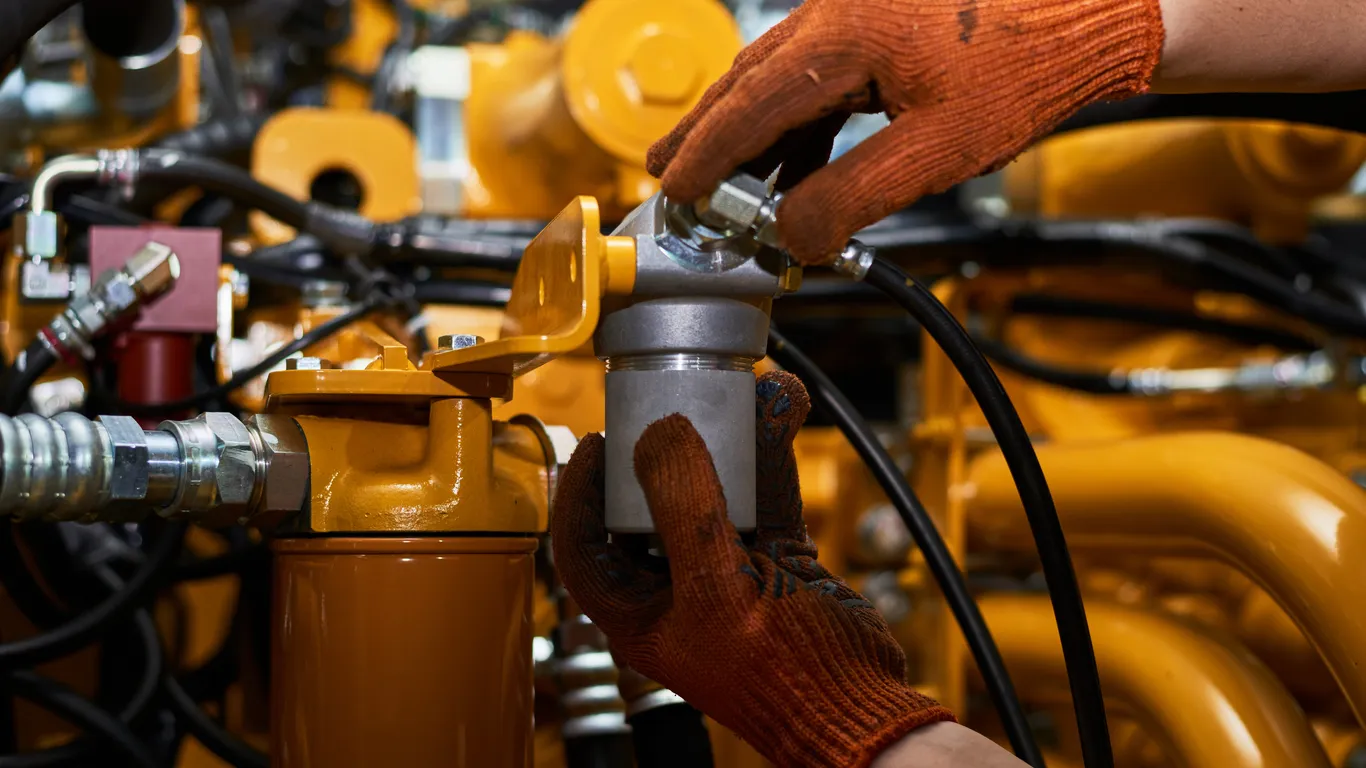
On a construction site, contamination is the enemy. Dust, water and dirt that get into fuel, oil or hydraulic fluid do more damage than almost anything else, and a lot of it gets in during routine maintenance.
A few habits make a big difference:
- Wipe fill caps, dipsticks and the area around them before opening anything.
- Keep oil and hydraulic fluid sealed and out of the weather, and top up with clean containers and funnels.
- Drain fuel water separators as your manual specifies, often daily, and fill fuel tanks at the end of the shift to limit condensation.
- Check air filter restriction indicators more often in dusty conditions, and follow the manufacturer's guidance on whether filters can be cleaned at all.
- Keep DEF sealed, clean and out of extreme heat. Contaminated DEF can damage the emissions system, and that's an expensive repair.
Oil analysis is worth adding for high-hour machines. A sample at each service shows wear metals and contamination long before anything fails, and it tells you whether your contamination control is actually working.
7. Plan field service instead of reacting to it
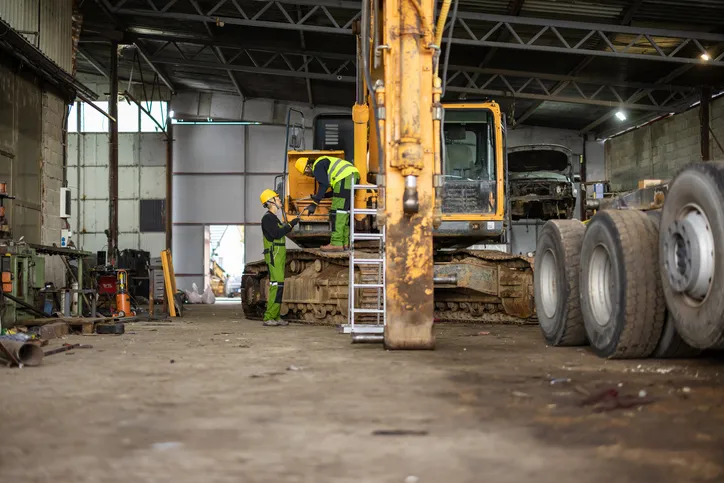
Most construction equipment gets serviced where it works, not in a shop. That makes the service truck and the mechanic's schedule part of your maintenance program.
Stock the truck for the machines on each site: the filters, fluids, grease and common wear parts they'll need for their next services. A mechanic who drives an hour to a site and finds the wrong filter on the truck has turned a two-hour service into a two-day one.
Use the backlog to make every trip count. Before a mechanic heads out, look at every open item on every machine at that site. A loose guard, a cracked step and a faulty seat switch can all be handled during the scheduled PM visit, instead of three separate trips or three reasons to take a machine out of production.
8. Adjust maintenance for the conditions
The intervals in the manual assume normal conditions. Plenty of construction work isn't normal, which is why most manufacturers publish severe-service guidance.
- Mud and clay: clean packed material out of the undercarriage regularly. Packed mud tightens the tracks and speeds up wear on rollers, idlers and sprockets, so check track tension against the ground you're working in.
- Dust: check air filters more often and keep radiators and coolers clean, since clogged cores cause overheating.
- Cold: use block heaters, give machines time to warm up before working them hard, run the right winter fuel and check batteries more often.
- Heat: keep coolers clean, watch coolant and hydraulic temperatures, and check tires on wheeled machines.
- Rock and abrasive material: inspect ground engaging tools, undercarriage and tires more often, since they wear much faster.
For fleets working through a Canadian winter, cold-weather prep deserves its own checklist before the first hard freeze.
9. Track what every repair costs, machine by machine
Maintenance isn't finished when the machine is running again. The last step is putting the cost where it belongs. Every hour of labor and every part used on a machine should be recorded against that machine, because that's how you find out which units cost more than they earn.
Those costs belong in the machine's maintenance cost per hour, alongside its ownership and operating costs. Track them that way and patterns show up quickly: the loader that eats a set of tires every season, the excavator whose repair cost per hour has doubled in two years, the dozer that's due for a replacement decision. Our equipment cost per hour calculator shows how those pieces add up, and our free equipment maintenance log template gives you somewhere to record the work and its cost, one sheet per machine.
A simple site maintenance schedule
Every machine and manufacturer is different, so treat this as a starting point and build your real schedule from the operator's manuals.
- Every shift: walkaround inspection, fluid levels, leaks, hour meter reading, greasing of high-wear points, and draining the fuel water separator where specified.
- Every week: a closer look at undercarriage or tires, cleaning out packed material, and checking air filter indicators, belts, batteries and cooler fins.
- Every 250 or 500 hours, depending on the model: the engine oil and filter service, fuel filters, and the checks your manual lists for that interval.
- Every 1,000 hours and up: hydraulic, transmission and final drive services on their own intervals, plus oil samples.
- Seasonally: winter prep before the first freeze, summer prep before the heat, and a full inspection before a machine moves to a new site.
Where software fits
None of these habits need software to get started. A clipboard, a whiteboard and a disciplined shop foreman can run a decent site maintenance program. The trouble starts when the fleet grows, the sites spread out and the one person holding it all together goes on vacation.
That's the gap a maintenance system fills. On Tenmil's Advanced plan, operators do the walkaround in the mobile app, even with no signal, and the hour reading updates the machine as they go. Failed items land on the machine's backlog automatically. PMs come due from each machine's actual hours, and every labor hour and part lands on the machine that used it, so cost per hour stays current. If you run construction equipment, our guide to construction equipment maintenance software covers what to look for.
The bottom line
Keeping equipment working on a construction site comes down to a handful of habits done every day: walk the machine, fix what you find, grease it, service it by the hour, keep the fluids clean, plan the field work and track what it all costs. None of it is new. The difference between fleets that keep their iron working and fleets that live in breakdown mode is whether those habits hold up when the job gets busy.
Build the habits into the routine, give every defect a place to go, and let the hour meter set the schedule.
If you want a starting point for the daily part, our free heavy equipment inspection checklists are ready to print or load into Tenmil as templates.
Related
Put this to work on your own fleet with Tenmil's construction equipment maintenance software.
Related articles
The Hidden Cost of "Close Enough": Why PM Timing Matters More Than You Think
Doing preventive maintenance early wastes money. Doing it late accelerates wear. Both cost you more than doing it on time — and most fleets don't realize how much the gap is costing them.
Is Your Equipment Actually Being Paid For? Internal Rates and the Recovery Gap
Every contractor charges its own projects for its own iron. If that internal rate isn't built from real cost per hour, the fleet quietly under-recovers, and the shortfall hides in overhead where nobody can see it.
Shop Rate: The Number That Decides Whether Your Maintenance Department Is a Cost Center or a Business
If your shop rate doesn't reflect the true cost of running your maintenance operation, you're not fully allocating spend to your equipment — and that leftover becomes an overhead black hole nobody can explain.