
The Hidden Cost of "Close Enough": Why PM Timing Matters More Than You Think
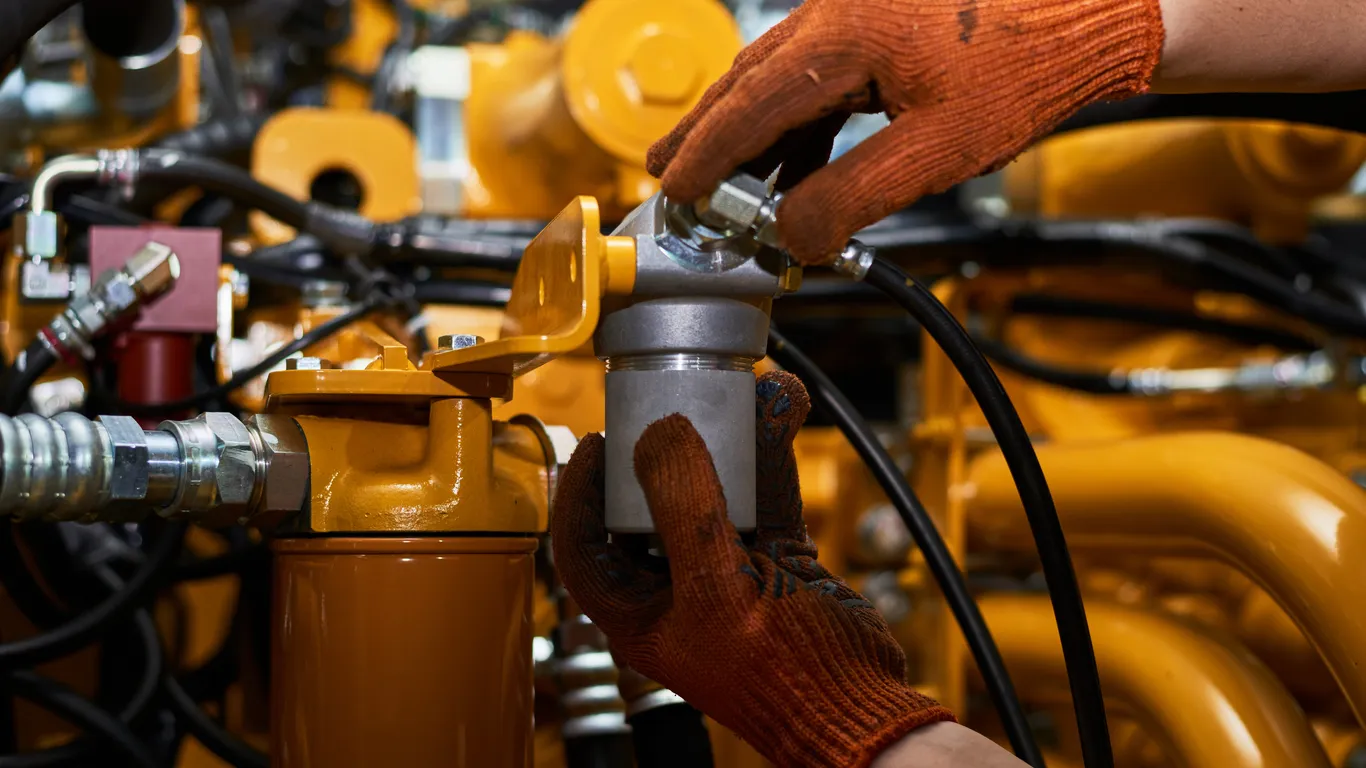
Every maintenance manager knows preventive maintenance matters. That's not a debate anymore. The equipment needs scheduled service to stay reliable, and skipping PMs leads to breakdowns that cost far more than the service would have. That much is understood.
What's less understood is that simply doing the PM isn't enough. When you do it matters just as much as whether you do it — and most operations don't treat timing with the same discipline they give to completion. A PM done 200 hours early and a PM done 200 hours late are both checked off as complete. Both show up as green in the compliance report. But both carry hidden costs that never show up on a work order, and over the life of a fleet, those costs are substantial.
The assumption most people operate under is that early is safe and late is risky. That's half right. Late is risky. But early isn't free. And the sweet spot — doing the work when it's actually due — is narrower than most operations realize.
The Cost of Doing It Late
Late PMs are the easier problem to understand because the consequences are more visible. When a machine runs past its service interval, the fluids and filters that were designed to protect it for a specific number of hours are now degraded beyond their intended service life. The engine oil that was engineered to maintain its protective properties for 500 hours is now being asked to perform at 600 or 700 hours. It's breaking down. Its viscosity is changing. Its ability to suspend contaminants and protect bearing surfaces is diminished.
This isn't hypothetical. Oil analysis tends to show it: samples from machines run past their intervals carry more wear metal (iron, copper, aluminum, chromium) than samples from identical machines serviced on time. Some of that is simply more hours on the same oil. The rest is what happens once the additives that neutralize acids and hold contaminants in suspension are used up. Those wear metals are physical evidence of accelerated component wear. The engine, the hydraulic system, the transmission, the final drives — whatever system is running on degraded fluids is wearing faster than it was designed to.
The cost doesn't show up on the late PM work order. The oil change costs the same whether it's done on time or 200 hours late. The filters cost the same. The labor costs the same. On paper, the late service looks identical to an on-time service. But the damage is already done. The accelerated wear that occurred during those extra 200 hours has shortened the life of internal components by some amount that won't become visible until months or years later, when a major component fails earlier than it should have.
This is the hidden cost of late PMs: you're borrowing against the future life of the machine. Every hour a machine runs past its service interval is an hour of accelerated deterioration that you'll eventually pay for in a major repair or premature replacement. The cost is real, it's just deferred — and because it's deferred, it's almost never traced back to the late PM that caused it.
Multiply this across a fleet and over years of operation, and the cumulative effect is significant. A fleet that routinely runs 10-15% over on service intervals isn't just being a little sloppy with scheduling. Published on-time PM compliance runs from 20% to 86% across the fleets that report it; the sources are in our heavy equipment maintenance statistics. It's systematically shortening the life of every machine and pulling major repair costs forward in time. The $400 oil change that got delayed isn't saving $400 — it's contributing to the $25,000 engine rebuild that happens at 12,000 hours instead of 15,000.
The Cost of Doing It Early
This is the side of the equation that almost nobody talks about, because early maintenance feels responsible. You're staying ahead of the schedule. You're being proactive. The machine is getting fresh fluids and new filters with plenty of life left in the old ones. What could possibly be wrong with that?
What's wrong is that you're consuming resources that didn't need to be consumed yet. Every early PM represents labor hours, parts, fluids, and machine downtime that were spent before they needed to be. And those costs, spread across a fleet and compounded over time, are far from trivial.
Consider a simple 500-hour engine oil service on a piece of equipment that runs about 1,500 hours per year. Our excavator 500-hour service checklist shows what one of those services actually includes. On schedule, that machine gets three oil services annually. Now shift every service 100 hours early — servicing at 400 hours instead of 500. Over the same 1,500 operating hours, you're now performing closer to four services instead of three. That's one extra service per machine per year — the oil, the filters, the labor, and the downtime — that accomplished nothing. The fluids you drained still had 100 hours of useful life. The filters you replaced were still doing their job.
One extra service on one machine is easy to shrug off. But most fleets aren't doing this on one machine. If this pattern holds across 30 machines, you've just added 30 unnecessary services per year. At $400-$800 per service depending on the machine, that's $12,000 to $24,000 in parts and labor that produced zero additional equipment protection. And that's just one service type on one interval. Most machines have multiple PM levels — engine service, hydraulic service, transmission service, cooling system service — each on its own interval. If the habit of early service applies across all of them, the waste multiplies accordingly.
Then there's the downtime cost. Every PM requires taking the machine out of production. On a busy jobsite, that window is valuable. Scheduling downtime for a service that isn't due yet means you're pulling a productive asset out of work unnecessarily. If that machine is billing $200 per hour on a project, even a four-hour service window represents $800 in lost production for work that could have waited.
Early PMs also distort your maintenance data. If your system tracks service intervals and costs, consistently early services make your per-hour maintenance costs appear higher than they should be. You're spreading the same fixed service costs over fewer operating hours between services, which inflates the apparent cost of maintaining each machine. That bad data then flows into cost-per-hour calculations, bid pricing, and replacement decisions — all slightly skewed by a habit that felt like diligence.
The Compounding Effect
The real damage from inconsistent PM timing isn't in any single service. It's in the pattern over the life of the asset.
A machine with a 15,000-hour design life that's consistently serviced on time will hit that mark with predictable component wear and maintenance costs that follow a known curve. The same machine serviced routinely late will hit end-of-life sooner — maybe at 12,000 or 13,000 hours — because the cumulative effect of running on degraded fluids has accelerated wear across every major system. The same machine serviced routinely early will technically last the same amount of time in hours, but will have consumed 20-30% more in PM costs along the way, with no additional benefit.
Either way, you're paying more per productive hour than you need to. Late services shorten the denominator — fewer total hours of useful life. Early services inflate the numerator — more total maintenance cost over that life. Both push cost per hour in the wrong direction, and both are entirely avoidable.
The optimal path is the one the manufacturer engineered: service at the prescribed interval, within a reasonable tolerance. That interval wasn't pulled out of thin air. It was determined through extensive testing of fluid degradation rates, filter capacities, and component wear patterns for that specific machine and application. Deviating from it in either direction means you're either over-maintaining or under-protecting.
Why Timing Slips in the First Place
If on-time PMs are the clear goal, why do most fleets struggle with it? Because real-world operations have real-world constraints that push service timing around.
Late PMs usually happen because the machine is on a project and nobody wants to pull it for service. There's pressure to keep iron working, especially when deadlines are tight. The PM is due at 2,000 hours, the machine is at 1,980, and the project manager needs it for another two weeks. So it runs to 2,200 before anyone gets it into the shop. Multiply that pattern across a fleet and a year, and you've got a systemic problem that nobody explicitly decided on — it just happened, one deferral at a time.
Early PMs usually happen for the opposite reason — convenience. The machine is already in the shop for a repair, so someone decides to knock out the upcoming PM while it's there, even though it's only at 350 hours on a 500-hour interval. Or a batch of machines comes off a project at the same time, and it's easier to service all of them at once regardless of where each one actually sits on its interval. The intent is efficiency, but the result is premature service that wastes resources.
Both patterns share a root cause: PM scheduling isn't being driven by actual data. It's being driven by convenience, habit, or pressure. And when the scheduling system doesn't make it easy to see exactly where each machine sits relative to its intervals — or when the system doesn't actively flag what's coming due versus what can wait — timing discipline erodes.
How a CMMS Keeps PMs on Track
This is one of the most fundamental jobs of a maintenance management system, and it's one of the clearest places where you see the difference between a system that works and a system that just stores records.
A proper CMMS tracks service intervals against actual equipment hours, not calendar guesses. When a machine's hour meter hits the threshold for its next PM, the system knows — and it can trigger the work order automatically, schedule it within the appropriate window, and make it visible to the people who need to act on it.
Tenmil handles this by tying PM schedules directly to asset meter readings. As hours accumulate, the system tracks where each machine sits relative to every active service interval. PMs are generated based on actual usage, not estimates or calendar approximations. The maintenance team can see what's coming due across the entire fleet, plan accordingly, and execute within the window that gets the full value out of each service without letting anything run over. On construction fleets — where the same machines swing between double shifts and idle months — that hour-meter discipline is the heart of our CMMS for construction guide.
When PM compliance data is live and visible, timing discipline becomes easier to maintain. The maintenance manager can see at a glance which machines are approaching service, which are in the window, and which are overdue. That visibility makes it much harder for services to quietly slip — and much easier to push back when a project manager wants to defer a PM that's already due.
It also eliminates the guesswork that leads to early services. When you can see that a machine is at 320 hours on a 500-hour interval, there's no reason to service it just because it's in the shop for something else. The data is clear: it's not due yet, and servicing it now is waste. That clarity turns PM timing from a judgment call into a data-driven decision.
The Bottom Line
Preventive maintenance only delivers its full value when it's done on time. Early PMs waste parts, labor, and downtime on services that haven't come due. Late PMs accelerate component wear and pull major repair costs forward. Both look fine on a compliance report, but both cost more than they should.
The goal isn't just PM completion — it's PM precision. Service the machine when it's due, within the engineered interval, based on actual operating hours. Not when it's convenient. Not when it happens to be in the shop. Not when someone gets around to it three weeks late. On time, every time, driven by data.
That's not perfectionism. It's math. And over the life of a fleet, the math adds up to real money.
If you want the interval discipline this article describes as something you can hand to the shop, we keep free maintenance checklists by asset type — daily walkarounds, inspections, and the hour-based services — printable, or loadable into Tenmil as PM templates.
Sources
About the numbers in this post. The $400 oil change, the $25,000 rebuild, the $400 to $800 per service, the $200-an-hour billing rate and the 15,000-hour design life are illustrative figures chosen to show the arithmetic, not averages. The published figures and definitions come from the sources below.
- Dan Holdmeyer, Used Oil Analysis Fundamentals, Tribology & Lubrication Technology, Society of Tribologists and Lubrication Engineers, December 2022. What iron, chromium, copper and aluminum in a used oil sample indicate, and the caution that a longer drain interval by itself raises the iron reading.
- City of San Diego, Office of the City Auditor, Performance Audit of the City's Fleet Maintenance (OCA-25-06), January 2025. The 20% on-time PM figure, the low end of the range quoted above.
- NAFA Fleet Management Association, 100 Best Fleets, in FLEET Solutions, July/August 2024. The 86% PM compliance figure, the high end of the range. Both endpoints and their caveats are on our heavy equipment maintenance statistics page.
- U.S. Environmental Protection Agency, Office of Transportation and Air Quality, Median Life, Annual Activity, and Load Factor Values for Nonroad Engine Emissions Modeling (NR-005d), 2010. Annual activity defaults of 1,092 hours for excavators and 1,641 for off-highway trucks, the scale behind the 1,500 hours a year used above.
- Equipment World, 2026 Tech & Spec Survey, 2026. Contractors replace excavators, dozers and backhoes at 8,000 to 10,000 hours and articulated trucks at 12,000 to 14,000, so the 12,000 to 15,000-hour lives above sit at the top of what fleets report. Also on our heavy equipment maintenance statistics page.
Related
Put this to work on your own fleet with Tenmil's heavy equipment maintenance software.
Related articles

How to Maintain Equipment on a Construction Site: 9 Habits That Keep Iron Working
Most site breakdowns don't come from bad luck. They come from small habits that slip once the job gets busy. Here are the nine that keep heavy equipment working, and the numbers behind them.
Is Your Equipment Actually Being Paid For? Internal Rates and the Recovery Gap
Every contractor charges its own projects for its own iron. If that internal rate isn't built from real cost per hour, the fleet quietly under-recovers, and the shortfall hides in overhead where nobody can see it.
Shop Rate: The Number That Decides Whether Your Maintenance Department Is a Cost Center or a Business
If your shop rate doesn't reflect the true cost of running your maintenance operation, you're not fully allocating spend to your equipment — and that leftover becomes an overhead black hole nobody can explain.