
The Hidden Revenue Engine: Why Equipment Cost Per Hour Is the Most Important Number in Your Fleet
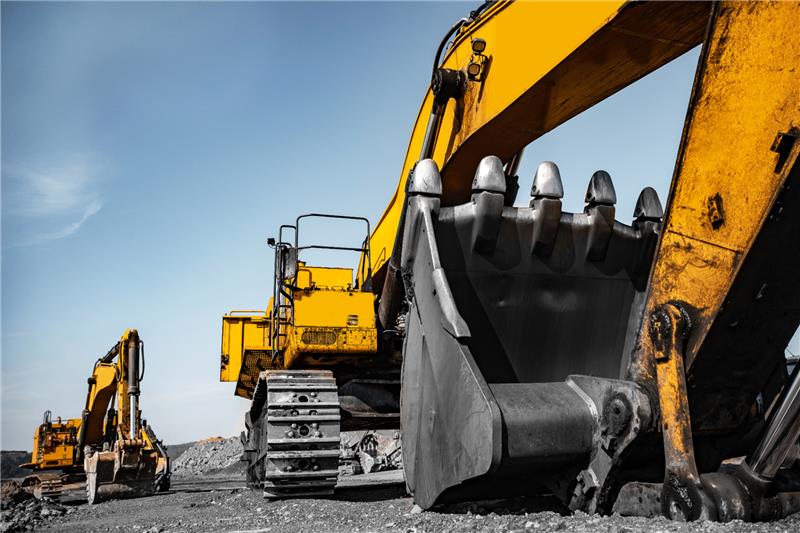
Every piece of heavy equipment in your fleet is a revenue-generating asset. A dozer pushing dirt, an excavator trenching utilities, a loader moving aggregate — they're all billing hours against a project, and every one of those hours carries a cost. The question is simple: do you actually know what that cost is?
For most construction and maintenance operations, the honest answer is no. Not accurately. Not in real time. And that gap between what you think your equipment costs per hour and what it actually costs per hour is where profit goes to die.
Equipment cost per hour drives your bid pricing, your rent-vs-own decisions, your replacement timing, and your maintenance strategy. Get it right, and you have a competitive edge that compounds across every project. Get it wrong, and you're guessing your way through multi-million dollar contracts.
The Three Pillars of Cost Per Hour
True cost per hour is built from three categories, each with its own set of inputs that most operations undercount or ignore entirely.
Ownership Costs
Ownership costs exist whether the machine runs or not. Depreciation is the biggest driver — a $500,000 excavator with 10,000 hours of useful life carries $50 per hour in depreciation alone, before you turn the key. Add financing or lease payments, insurance, taxes, and registration fees, and ownership often becomes the largest component of cost per hour, especially on newer equipment.
The critical thing about ownership costs: they're time-based, not usage-based. If your excavator sits idle for three months, those costs don't pause. They just get spread across fewer productive hours, driving your effective cost per hour up. This is why utilization rate is so tightly linked to cost per hour — a machine working 1,000 hours a year has double the ownership cost per hour compared to one working 2,000.
Maintenance Costs
Maintenance is where cost per hour gets complicated — and where most companies lose the plot. This category includes every dollar spent keeping that machine operational: preventive maintenance, unplanned repairs, labor, parts, and third-party services. All of it.
Preventive maintenance is the predictable stuff — scheduled services, fluid changes, greasing, inspections. But that's just the floor. The real numbers live in repair costs. A single engine rebuild can run $20,000-$40,000. A transmission failure on a large dozer can hit $30,000+. A hydraulic pump replacement might be $8,000-$15,000. Over the life of a machine, these aren't rare events — they're inevitable.
Labor is a huge and frequently underestimated component. Every hour a mechanic spends on a machine is a cost that needs to be captured and allocated to that specific asset. Parts costs go beyond the invoice price — you're paying to stock, warehouse, and manage inventory. Third-party service costs from dealers, contractors, and mobile mechanics all need to be tracked back to the machine that received the work.
The challenge is that maintenance costs aren't linear. A machine in its first 5,000 hours has vastly different maintenance costs than the same machine between 15,000 and 20,000 hours. Using a flat estimate across the machine's life understates costs on older equipment and overstates them on newer machines.
Operational Costs
Operational costs are the direct expenses incurred when the machine is actually running. Fuel is the obvious one — a large dozer might burn 8-12 gallons per hour, an excavator 4-8 gallons depending on the application. At current diesel prices, that adds up fast, and consumption varies dramatically between idling, grading, and heavy digging.
Tires and undercarriage belong here too. A set of tires for a large wheel loader can cost $20,000-$40,000. Undercarriage on a large dozer — chains, rollers, idlers, sprockets — can represent a $30,000-$60,000 replacement cycle. These are wear items driven by operating conditions, not maintenance events.
Why Most Companies Get This Number Wrong
The biggest problem is fragmented data. Ownership costs live in accounting software. Fuel is on a fleet card. Parts costs are scattered across vendor invoices. Labor hours are on timesheets — or not tracked at all. Getting all of this allocated to the right asset and divided by actual operating hours requires connecting systems that were never designed to talk to each other.
The second problem is timing. Most companies that attempt a cost-per-hour calculation do it retrospectively — maybe quarterly, maybe annually, maybe only when building a bid. By the time the number is ready, it's already outdated.
The third problem is incomplete capture. If your mechanic spends three hours on a hydraulic repair but only the parts cost gets recorded, your number is wrong. If a vendor invoice sits in AP for six weeks before someone allocates it to the right machine, your number is wrong for that entire period. Every missed entry, every miscoded expense makes the number less reliable — and decisions made on bad numbers lead to bad outcomes.
What Accurate Cost Per Hour Enables
When you have reliable, current cost-per-hour data, it changes how you run the operation. Bid pricing becomes grounded in reality — you know your floor, you know your margin, you're calculating instead of guessing. Rent-vs-own decisions become clear when you can compare actual ownership cost per hour against rental rates. Fleet benchmarking becomes possible — if five identical excavators are in your fleet and one costs 30% more per hour, that's a red flag worth investigating.
Replacement timing is where the data gets especially powerful. Total cost per hour typically follows a U-shaped curve: high early on when depreciation dominates, declining as the machine ages, then climbing again as repair costs accelerate. The bottom of that curve is your optimal replacement window. Without ongoing cost-per-hour data, you can't see it — you're either replacing too early or paying escalating repair costs that eat your margin.
The Role of a CMMS
This is where a Computerized Maintenance Management System becomes essential. A proper CMMS captures the critical cost inputs that feed maintenance cost per hour — labor, parts, and third-party services — at the point of occurrence. When a technician closes a work order, the system records how many hours they spent, what parts they used at actual cost from inventory, and any outside vendor charges. All tagged to the specific asset, building a continuous cost history.
If you want a starting estimate while you build that history, our free equipment cost per hour calculator walks through the ownership and operating math with a worked excavator example.
This is fundamentally different from reconstructing costs after the fact. There's no reconciliation lag, no miscoding, no lost invoices. The mechanic closes the work order and the cost is recorded, categorized, and immediately available.
Tenmil's CMMS takes this a step further — cost data is live. As work orders close, as parts are issued, as hours accumulate, cost-per-hour calculations update automatically. There's no report to run, no export to Excel, no pivot table to build. The numbers are current, always.
That matters practically. When you're building a bid and need cost-per-hour rates for your dozer fleet, you open the system and the numbers are there. When a machine has two expensive repairs in a month, the cost-per-hour spike is visible immediately — not three months later in a quarterly review. You're not compiling data when you need it. You're making decisions because the data is already in front of you.
That shift — from periodic analysis to continuous awareness — is what separates operations that control their costs from operations that discover their costs after the damage is done.
The Bottom Line
Equipment cost per hour connects your fleet to your profitability. Getting it right means capturing ownership, maintenance, and operational costs with enough accuracy and timeliness to act on. The companies that master this number bid more accurately, maintain more strategically, and replace at the right time. The ones that don't are making million-dollar equipment decisions on incomplete data.
The math isn't complicated. The discipline of capturing the right data, in the right system, in real time — that's what makes the difference.
Related
Put this to work on your own fleet with Tenmil's equipment cost per hour calculator.
Related articles
Is Your Equipment Actually Being Paid For? Internal Rates and the Recovery Gap
Every contractor charges its own projects for its own iron. If that internal rate isn't built from real cost per hour, the fleet quietly under-recovers, and the shortfall hides in overhead where nobody can see it.
Shop Rate: The Number That Decides Whether Your Maintenance Department Is a Cost Center or a Business
If your shop rate doesn't reflect the true cost of running your maintenance operation, you're not fully allocating spend to your equipment — and that leftover becomes an overhead black hole nobody can explain.
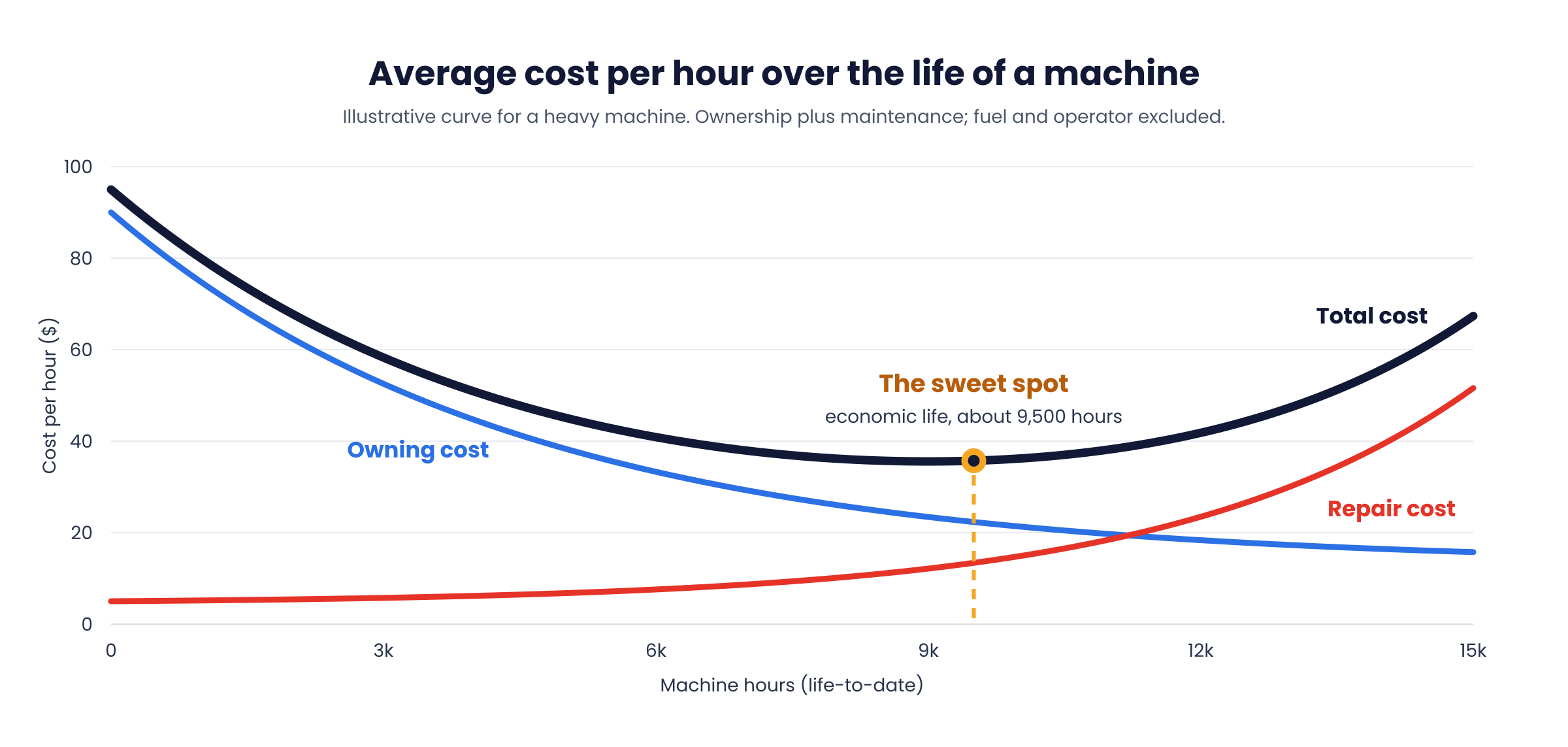
When to Replace a Machine: The Cost Curve Nobody Draws
Every machine has a point where it costs less per hour than it ever will again. Most fleets trade too early or run right past it, because nobody is drawing the cost curve that shows where that point is.