
Choosing a CMMS for Heavy Equipment: Two Kinds of Software, and Why Neither Was Built for Your Shop
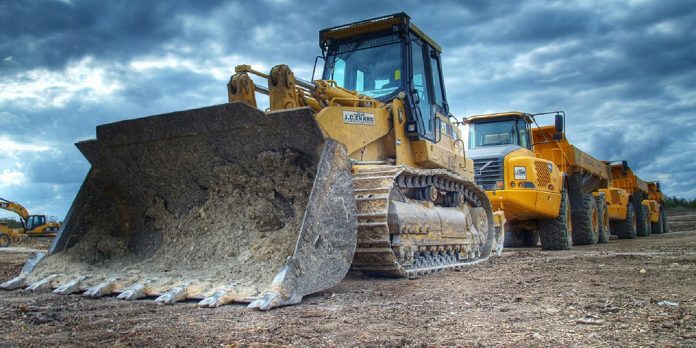
Search for heavy equipment maintenance software and you'll get two kinds of results. The first is CMMS platforms built for manufacturing plants: Fiix, eMaint, MaintainX and their peers. The second is fleet and equipment management platforms built for tracking and running a fleet: Fleetio, Tenna, Clue and others. Both kinds are good software. Both have thousands of happy customers. And both were designed for a job that is not running a heavy equipment maintenance department.
That distinction matters more than any feature list. Software carries the assumptions of the world it was built for. A plant CMMS assumes assets bolted to a floor, production lines, and shifts. A fleet platform assumes location, utilization, dispatch, and drivers. When you drop a heavy equipment shop into either one, the daily work still gets done, but a growing share of it happens beside the software instead of inside it: a spreadsheet for shop rate, a binder for parts warranty, an email chain for billing, a "miscellaneous" cost bucket that nobody can explain. That's where the workarounds live, and workarounds are where data accuracy dies.
Tenmil was built for the third thing: the maintenance department that keeps yellow iron running. Not a plant, not a trucking fleet, a shop full of mechanics, a parts room, a purchasing desk, and forty to four hundred machines spread across job sites. Here's how the three kinds of software compare on the workflows that actually decide whether your numbers can be trusted.
Tenmil vs Fiix, eMaint and MaintainX: Manufacturing CMMS Meets the Shop
Fiix, eMaint and MaintainX are strong CMMS platforms, and their strengths tell you who they were built for. Fiix, owned by Rockwell Automation, is at its best in plants that want maintenance tied to PLC data and production systems. eMaint, from Fluke Reliability, leans into condition monitoring, sensor integration, and the compliance documentation regulated manufacturers need. MaintainX made its name with a mobile-first app that plant technicians and operators actually use. If you run a production facility, any of the three deserves a look.
Now put a heavy equipment fleet in one. The core loop still works: create a work order, assign it, close it. But the assumptions underneath start to fight you.
The assets move. A plant CMMS expects a machine to have a location and a hierarchy: line, cell, asset. A dozer has a job site this month and a different one next month, and its cost has to follow it. PMs in a plant run on calendars or production counts; heavy equipment PMs run on hour meters, several intervals per machine, with hours ideally pulled from telematics instead of typed in. Downtime in a plant is measured against production output; downtime on a fleet is measured against a job that is paying by the hour for that machine.
Then come the shop-side workflows that a plant CMMS was never asked to handle. Parts warranty tracked against a specific unit, so the second failure of a warrantied component gets caught before you pay for it twice. Parts returns to vendors and core charges that need a paper trail, not a quantity edit. Shop overhead captured and turned into a shop rate so labor is charged to machines at what it actually costs. Work orders billed to job sites. Ownership costs sitting beside maintenance costs so each machine has a real cost per hour. Some of this can be approximated with custom fields and reports, and every heavy equipment shop running a plant CMMS has done exactly that. But approximated workflows produce approximate data, and the gaps get filled by spreadsheets that live outside the system and drift the moment someone stops maintaining them.
The result isn't a system that fails. It's a system that quietly stops being the source of truth. Work orders exist, but they don't carry the true cost of the work. Parts records exist, but they can be adjusted without a trail. The department's spend is partly on the machines and partly in a bucket labeled "shop," and the cost per hour that comes out the other end can't be defended in a bid meeting.
Tenmil vs Fleetio, Tenna and Clue: Fleet Platforms Built Around Operations
The second group gets closer to the equipment, but from a different direction. Tenna and Clue are construction equipment management platforms whose center of gravity is the operations side of the fleet: where the assets are, how they're utilized, dispatch and scheduling, telematics pulled into one view. Tenna's platform starts from its own tracking hardware, with maintenance, parts, and mechanic time cards offered as premium modules layered on top of that core. Clue is a telematics aggregation and equipment management platform first, with maintenance sold as its own module alongside dispatch and its basic tier. Fleetio is the different one in this group: it is maintenance-first, but it grew up on trucks and vans, so its vocabulary is drivers, DVIRs, fuel cards and odometers, and it has extended into yellow iron and engine hours from there.
All three are useful, and for some fleets the operations problem is the bigger problem. If your headache is finding equipment, cutting rental spend, or dispatching crews, a tracking-first platform earns its keep. But when the maintenance department is the buyer, the architecture shows.
Maintenance that arrives as a module tends to be built to record maintenance, not to run a shop. It will log a service, hold a service history, and remind you what's due. What it typically doesn't do is carry the department's financial workflows end to end: purchasing and receiving into a parts room, returns and warranty with a data trail, overhead capture and a shop rate, labor costed to the machine at that rate, work orders billed out to jobs, and cost per hour that includes ownership. Those pieces get done somewhere, because they have to be. They just get done in accounting, in Excel, or in someone's head, and the fleet platform never sees them.
There's a second, quieter cost. Tracking-first platforms are often tied to their own hardware, so the software's value rises and falls with the trackers. A maintenance system should be indifferent to whose telematics are on the machine, because a mixed fleet has Cat, Deere, Komatsu and Volvo units with three different portals, plus older iron with no telematics at all, and the shop has to maintain all of it either way. Where the operations view and the maintenance system meet is its own topic — our heavy equipment fleet management software guide maps that boundary.
What Every Heavy Equipment Maintenance Department Actually Does
Step back from the software for a second, because the interesting thing about heavy equipment maintenance is how similar the work is everywhere. A 60-unit earthmoving contractor in Alberta, a mine site in Nevada, and a municipal fleet in Ontario run different iron for different reasons, but the maintenance department does the same things.
It runs PMs on hours, off meters, at multiple intervals per machine. It opens work orders that need to carry three kinds of cost: mechanic labor at what that labor really costs, parts at what was paid for them, and outside services from vendors. It runs a parts room with purchase orders, receiving, returns, cores and warranty. It carries overhead that can't be pointed at any single machine: the shop building, the service trucks, the supervisor, the tooling, the training. It has to turn that overhead into a shop rate so it can be spread across the equipment instead of piling up in a bucket. It has to bill work back to the jobs that used the machines. And at the end of all of it, someone wants to know what each machine costs per hour, ownership included, so the fleet can bid, charge, and replace with real numbers.
That's the standard. Not the feature list on a website, but whether each of those workflows lives inside the software from start to finish, or stops at a field somebody has to remember to fill in. It's the difference between a system and a filing cabinet, and it's the test that manufacturing CMMS and fleet platforms both tend to fail on the shop-side details.
Where Tenmil Is Different: The Details Live in the System
Tenmil was designed around those shared workflows, and the difference shows up in the details that other systems leave outside the software. Four examples.
Parts warranty. In most systems, warranty is a note on a part, if it exists at all. In Tenmil, warranty is tracked on the part installed on a specific machine, and it works as a live warning: when a mechanic adds that same part to a work order for a unit that already has one under warranty, the system flags it before the job proceeds. That's the difference between "we track warranty" and "we don't pay twice for a failed part." Warranty recovery is real money that most fleets leave on the table simply because nobody remembered.
Parts returns. The usual way to handle a return in a CMMS is to remove the part from stock and delete it from the purchase order, which means the parts record can be quietly rewritten and nobody can reconstruct what happened. Tenmil handles returns as an actual workflow: the return is a transaction, tied to the original PO and vendor, with its own trail. Parts can't be added or removed from the system without a record of why. That sounds small until you're trying to reconcile a parts room, or trying to trust the parts cost on a work order.
Overhead costs and shop rate. Tenmil captures the costs that can't be charged to a machine, then uses them to build the shop rate. Every hour of mechanic time on a work order is costed at that rate, so the whole department's spend, not just parts and wages, gets spread across the equipment that consumed it. Instead of a "cost of doing business" line that never gets allocated, the overhead lands on the machines and shows up in cost per hour. This is what lets a maintenance department prove where its budget went, unit by unit.
Billing. Work orders in Tenmil can be billed to job sites, and the system tracks where each one sits: reviewed, approved, billed. That keeps the fleet department and accounting on the same page. The work that got done, the cost that got charged, and the job that got billed match, in one system, instead of being reconciled by email at month end.
The thread through all four is follow-through. A part carries its warranty from the PO to the shelf to the work order. A return corrects stock, cost and the PO together. Overhead flows into shop rate, shop rate flows into labor cost, labor cost flows into the asset's cost per hour, and that cost per hour is what gets billed to the job. Nothing needs to be redone somewhere else, and nothing can be changed without the rest of the system knowing.
A Fair Way to Choose
None of this means the other platforms are bad. It means fit matters more than features, and the way to test fit is to demo the details, not the dashboard. Whatever system you're evaluating, ask to see five things: a part returned to a vendor and what happens to stock, cost and the PO; a mechanic adding a part that's still under warranty on that machine; a shop rate built from actual overhead and applied to labor on a work order; a work order billed to a job site with its review status; and a machine's cost per hour with ownership costs included. If any of those answers starts with "you'd handle that in a spreadsheet" or "you can add a custom field for that," you've found the workaround, and you've found where your data will go wrong. For construction fleets specifically, our CMMS for construction guide runs the same test in more depth. If you want the full evaluation kit, our how to choose heavy equipment maintenance software guide has the requirements matrix, the twelve vendor questions, and a scoring sheet.
If you run a plant, Fiix, eMaint or MaintainX will likely serve you better than anything built for iron. If you run an on-road fleet, Fleetio was made for you. If your primary problem is knowing where equipment is and getting it dispatched, Tenna and Clue are built for that. And if you run a heavy equipment maintenance department and want the shop's own workflows to live inside the software, that's what Tenmil is for.
Fit Beats Features
Every CMMS on this list can create a work order. The question is what happens around it: whether the parts, the warranty, the overhead, the shop rate, the billing and the cost per hour all move through the same system, or whether half of them live outside it in tools that don't talk to each other. Heavy equipment shops have been making manufacturing software and fleet software work for years, one workaround at a time. The cost of that isn't the license fee. It's the numbers you can't trust when it matters.
Related
Put this to work on your own fleet with Tenmil's heavy equipment maintenance software.
Related articles

Your CMMS Is Either a System or a Filing Cabinet and the Difference Is Costing You
Not all CMMS platforms are created equal. Some connect your data and turn it into decisions. Others just store it. If yours only gives back what you put in, you've got an expensive filing cabinet.
Is Your Equipment Actually Being Paid For? Internal Rates and the Recovery Gap
Every contractor charges its own projects for its own iron. If that internal rate isn't built from real cost per hour, the fleet quietly under-recovers, and the shortfall hides in overhead where nobody can see it.
Shop Rate: The Number That Decides Whether Your Maintenance Department Is a Cost Center or a Business
If your shop rate doesn't reflect the true cost of running your maintenance operation, you're not fully allocating spend to your equipment — and that leftover becomes an overhead black hole nobody can explain.